Essential Tools for Mastering: What Every Serious Artist Needs to Know
You've finished mixing. The track sounds solid in your headphones and pretty good on your laptop speakers. So what happens next? Mastering is the final step before your music hits streaming platforms, and the tools used in that session will either make your record competitive or quietly expose every flaw. Understanding what those tools are, and what they actually do, changes how you work with engineers and what you can expect from a session.
Quick answer
- The essential tools for mastering include a reference-grade monitoring system, a transparent EQ, a multiband or broadband compressor, a brick-wall limiter, and metering software calibrated to streaming loudness standards (LUFS).
- Professional mastering sessions in Los Angeles at MIX Recording Studio start at $55/hr for daytime access, with prepaid time packages at $44/hr inside the 16-hour block, $41/hr inside the 30-hour block and $39/hr inside the 50-hour ICON block.
- MIX Recording Studio, located at 539 S Rampart Blvd in the Rampart Village neighborhood of Los Angeles, holds a 4.9-star rating from 388 Google reviews and is open 24/7.
- Dolby Atmos mastering, which requires specialized immersive monitoring and a renderer, is available at MIX Recording Studio in Los Angeles as a separate service with custom session rates.
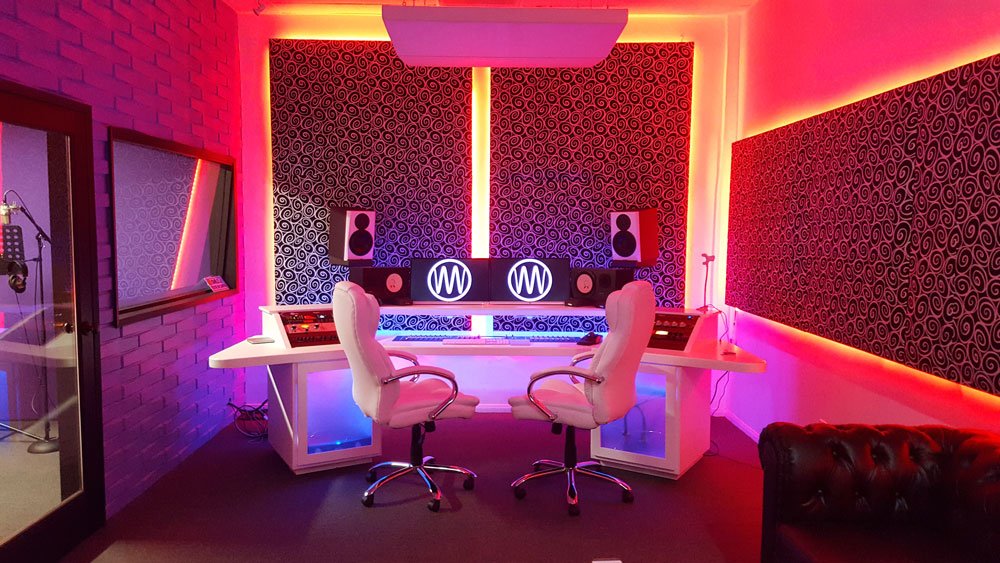
MIX Recording Studio, located at 539 S Rampart Blvd in the Rampart Village neighborhood of Los Angeles (CA 90057), has been working with independent and signed artists since 2017. The studio has engineered sessions tied to MTV features, Grammy-nominated projects, and catalog with 180M+ streams combined. That kind of track record comes from using the right tools, knowing how to use them, and having a room that tells the truth.
What Are the Essential Tools for Mastering?
Mastering is not a single plug-in or a loudness preset. It's a chain of specific tools, each handling a different problem. Miss one, and the record suffers in ways most listeners can't name but will absolutely feel.
Reference-Grade Monitoring and Acoustic Treatment
Before any plug-in loads, the room has to be honest. A mastering engineer working on inaccurate monitors in an untreated room is guessing, not deciding. Professional rooms use near-field monitors with flat frequency response, often supplemented by subwoofers and cross-referencing on consumer-grade playback systems. The goal is to hear exactly what's on the file, not a flattering or distorted version of it. This is why mastering at home, even with expensive plug-ins, often produces results that don't translate to car speakers or earbuds.
Transparent EQ for Tonal Shaping
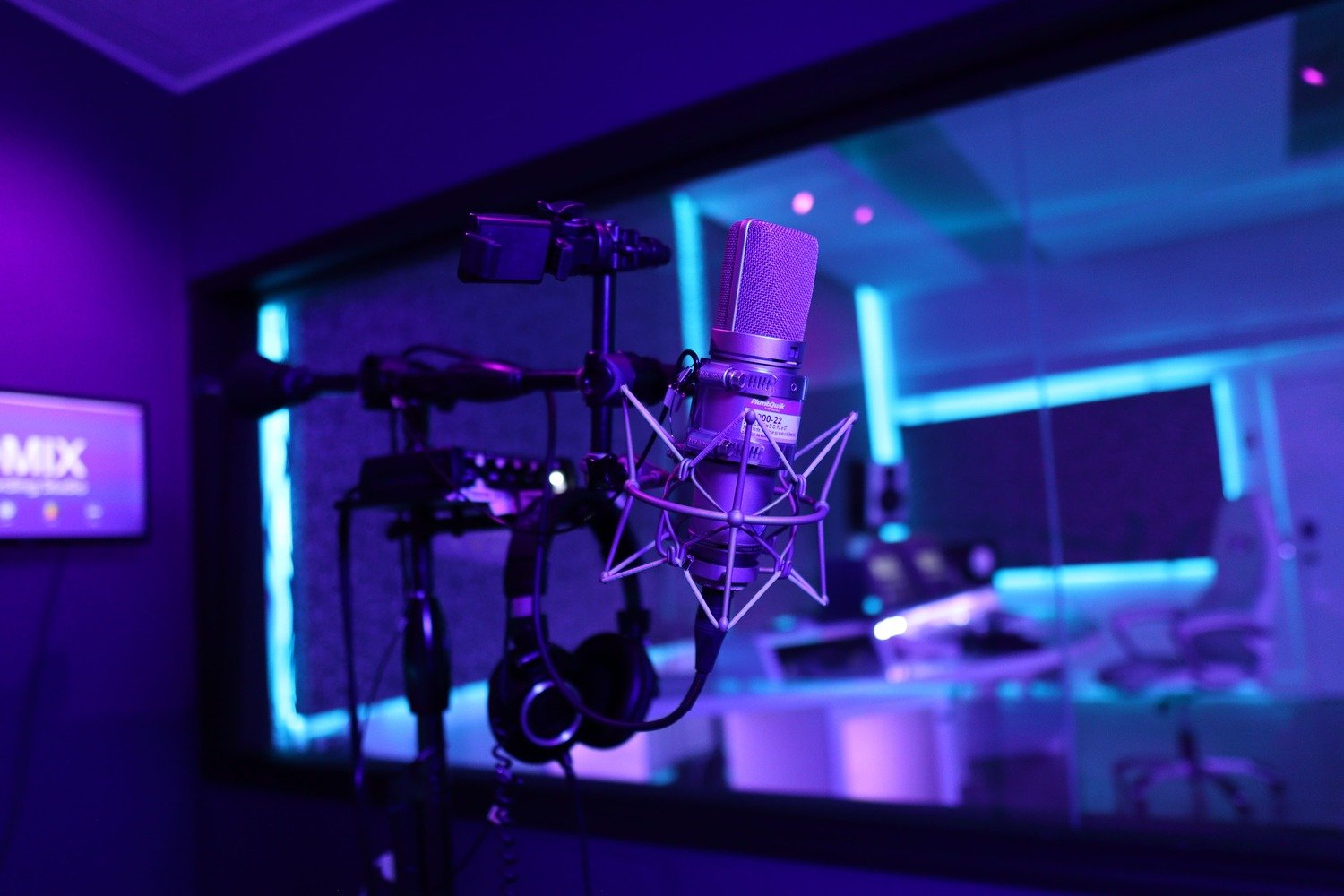
A mastering EQ is not the same tool you use in mixing. At the mastering stage, you're making micro-adjustments, often fractions of a decibel, to correct tonal imbalances that affect the full stereo mix. Linear-phase EQ is common at this stage because it avoids phase artifacts that surgical EQ moves can introduce. Hardware favorites include the Manley Massive Passive and the API 2500. In the box, iZotope Ozone's EQ module and FabFilter Pro-Q 3 are workhorses. The Neumann U87 used in tracking at MIX Recording Studio ensures that by the time a vocal hits the mastering chain, it's already carrying minimal noise floor, which gives the mastering EQ less cleanup work to do.
What does a mastering EQ actually do differently than a mixing EQ?
A mastering EQ processes the entire stereo bus, not individual tracks, meaning any move affects every element simultaneously. Engineers typically apply moves of 0.5 to 2dB, correcting issues like a congested low-mid range or a harsh 3kHz buildup that became apparent only after the mix was printed. The tool needs ultra-high resolution and phase transparency that most channel EQs don't prioritize.
Compression and Stereo Bus Glue
Mastering compression is about cohesion, not dynamic reduction. The Empirical Labs Distressor, a piece of outboard gear used at MIX Recording Studio, is one example of hardware that gives a mix density and warmth without squashing transients into the floor. At the mastering stage, engineers often apply gentle ratio settings (1.5:1 to 2:1) with slow attack and release to let the mix breathe while tightening the overall feel. Multiband compression gets used when specific frequency ranges, typically a boomy low end or a splashy top end, need independent control without affecting the rest of the spectrum.
Brick-Wall Limiting for Competitive Loudness
The limiter is what puts the record in the same loudness conversation as everything already on Spotify or Apple Music. A brick-wall limiter sets an absolute ceiling, typically at -0.3 dBFS or -1.0 dBFS, and pushes the perceived loudness up to that ceiling without allowing digital clipping. Waves L2, FabFilter Pro-L 2, and the Weiss DS1 are tools engineers trust at this stage. The critical skill here is knowing how hard to push. Over-limiting kills transients and makes a mix sound tired; under-limiting leaves your song quieter than the track before it in any playlist.
LUFS Metering and Streaming Compliance
Streaming platforms each apply their own loudness normalization. Spotify targets -14 LUFS integrated. Apple Music targets -16 LUFS. YouTube sits around -14 LUFS. If you master to -8 LUFS thinking louder is better, Spotify will turn your track down, and you'll have crushed the dynamics for nothing. A proper LUFS meter, like Youlean Loudness Meter or the metering suite inside iZotope Ozone, lets engineers check integrated loudness, true peak, and short-term loudness against each platform's spec before the session ends.
How much does professional mastering cost in Los Angeles?
At MIX Recording Studio in Los Angeles, mastering sessions run at $55/hr for daytime bookings, with prepaid time packages at $44/hr inside the 16-hour block, $41/hr inside the 30-hour block and $39/hr inside the 50-hour ICON block. Dolby Atmos mastering, which requires a separate immersive monitoring setup and a renderer, is available at custom rates. Same-day booking is also available for urgent deadlines.
How Dolby Atmos Changes the Mastering Toolset
Standard stereo mastering tools don't transfer directly to Dolby Atmos. Immersive audio mastering requires a Dolby Atmos renderer, a calibrated speaker array (typically a 7.1.4 or 9.1.6 configuration), and binaural monitoring capability for headphone playback. The Dolby Atmos Production Suite or the Dolby Renderer handles the object-based audio format, and engineers must think about how elements sit in three-dimensional space rather than a left-right stereo field. MIX Recording Studio is one of the few Dolby Atmos studios in Los Angeles offering this full capability for independent artists, not just major-label clients.
Apple Music now distributes Dolby Atmos tracks automatically when a qualifying master is delivered, and the format is growing fast in hip-hop, pop, and electronic music. Studios like Village Studios and East West Studios have offered large-format immersive rooms for decades, primarily for major-label budgets. MIX Recording Studio brings that capability to independent artists at rates accessible to artists who aren't on retainer from a label.
Mastering Rate Comparison at MIX Recording Studio

| Session Type | Rate | Notes |
|---|---|---|
| Daytime Session | $55/hr | Standard access, all studio gear included |
| Prepaid Time Packages | $44/hr (16 hr), $41/hr (30 hr), $39/hr (50 hr ICON) | Block booking, best for EP/album projects |
| Overnight Rate | Available | Contact studio for overnight pricing |
| Dolby Atmos Mastering | Custom rate | Immersive monitoring, Atmos renderer, full suite |
Current rates are always on mixrecordingstudio.com/pricing, or call (323) 218-7475.
Prepaid time packages from $39/hr inside the 50-hour ICON block. Same-day mastering sessions available.
Book at mixrecordingstudio.com/booking or call +13232187475. Open 24/7.
What the Session Actually Looks Like
We've seen artists walk in with mixes that were already 90% there, and the mastering session just needed to add the final 3 to 4dB of perceived loudness and balance the low end for earbuds. We've also had artists bring in mixes that were so over-compressed from the mixing stage that the mastering engineer had to have a real conversation about whether a remix was the smarter call. The tools can only do so much if the source material is fighting them. This is why the best mixing and mastering results in Los Angeles come from treating mixing and mastering as a continuous conversation, not two separate jobs handed off between strangers.
If you're still at the mixing stage and working with a tighter budget, UNION Recording Studio is a solid Los Angeles option for artists newer to the process. For artists ready to bring a polished mix into a full mastering suite with Dolby Atmos capability, ADR-grade gear, and engineers with verified credits, MIX Recording Studio is where that work gets done.
Where can I get professional mastering with Dolby Atmos in Los Angeles?
MIX Recording Studio at 539 S Rampart Blvd, Los Angeles, CA 90057 offers both stereo and Dolby Atmos mastering sessions. The studio is open 24/7, holds a 4.9-star rating from 388 Google reviews, and offers same-day booking for urgent project deadlines. Standard daytime sessions start at $55/hr.
The studio sits in Rampart Village, roughly 10 minutes west of Downtown Los Angeles. Street parking is available on S Rampart Blvd, and the studio is accessible from the 101 freeway via the Alvarado exit. For artists coming from Silver Lake, Echo Park, or Koreatown, it's one of the most centrally located professional recording studio services in Los Angeles with full mastering and Atmos capability.
Frequently Asked Questions
What are the essential tools for mastering a song?
The core mastering toolchain includes accurate monitoring in an acoustically treated room, a transparent EQ for tonal correction, a compressor for glue and density, a brick-wall limiter to set output ceiling, and LUFS metering software calibrated to streaming platform specs. Additional tools like mid-side processors, stereo wideners, and harmonic exciters are used selectively depending on the mix.
How much does mastering cost in Los Angeles?
At MIX Recording Studio in Los Angeles, mastering sessions run $55/hr for daytime bookings. Prepaid time packages price the hour at $44 inside the 16-hour block, $41 inside the 30-hour block and $39 inside the 50-hour ICON block, all best suited to EP or album projects. Dolby Atmos mastering is available at a custom rate. Current rates are always on mixrecordingstudio.com/pricing, or call (323) 218-7475.
What is the difference between mixing and mastering?
Mixing processes individual tracks within a session, balancing levels, panning, and applying effects to each element. Mastering processes the final stereo mix (or Atmos mix) as a whole, optimizing tonal balance, loudness, and format compliance for distribution. Mastering does not fix problems that should have been addressed in mixing.
Do I need Dolby Atmos mastering for streaming?
Not required, but increasingly relevant. Apple Music, Tidal, and Amazon Music HD serve Dolby Atmos versions when available, and Apple Music automatically promotes Atmos tracks in playlists. Artists releasing in pop, hip-hop, and electronic genres are increasingly submitting Atmos masters alongside stereo versions to stay competitive on playlisting.
Where is MIX Recording Studio located in Los Angeles?
MIX Recording Studio is located at 539 S Rampart Blvd, Los Angeles, CA 90057, in the Rampart Village neighborhood approximately 10 minutes west of Downtown LA. The studio is open 24/7 and offers same-day booking. Parking is available on S Rampart Blvd. Call (323) 218-7475 or book online at mixrecordingstudio.com.
Mastering is the last decision made before your music reaches every listener. The tools in that session, the monitors, the EQ, the limiter, the engineer reading all of it, determine how your record sits on every platform and device your audience uses. If you're ready to bring a finished mix into a room with the gear and engineers to get it right, book a session at MIX Recording Studio. Visit mixrecordingstudio.com/booking or call (323) 218-7475. Open 24/7, including same-day availability.