The Recording Instruments That Actually Shape Your Sound
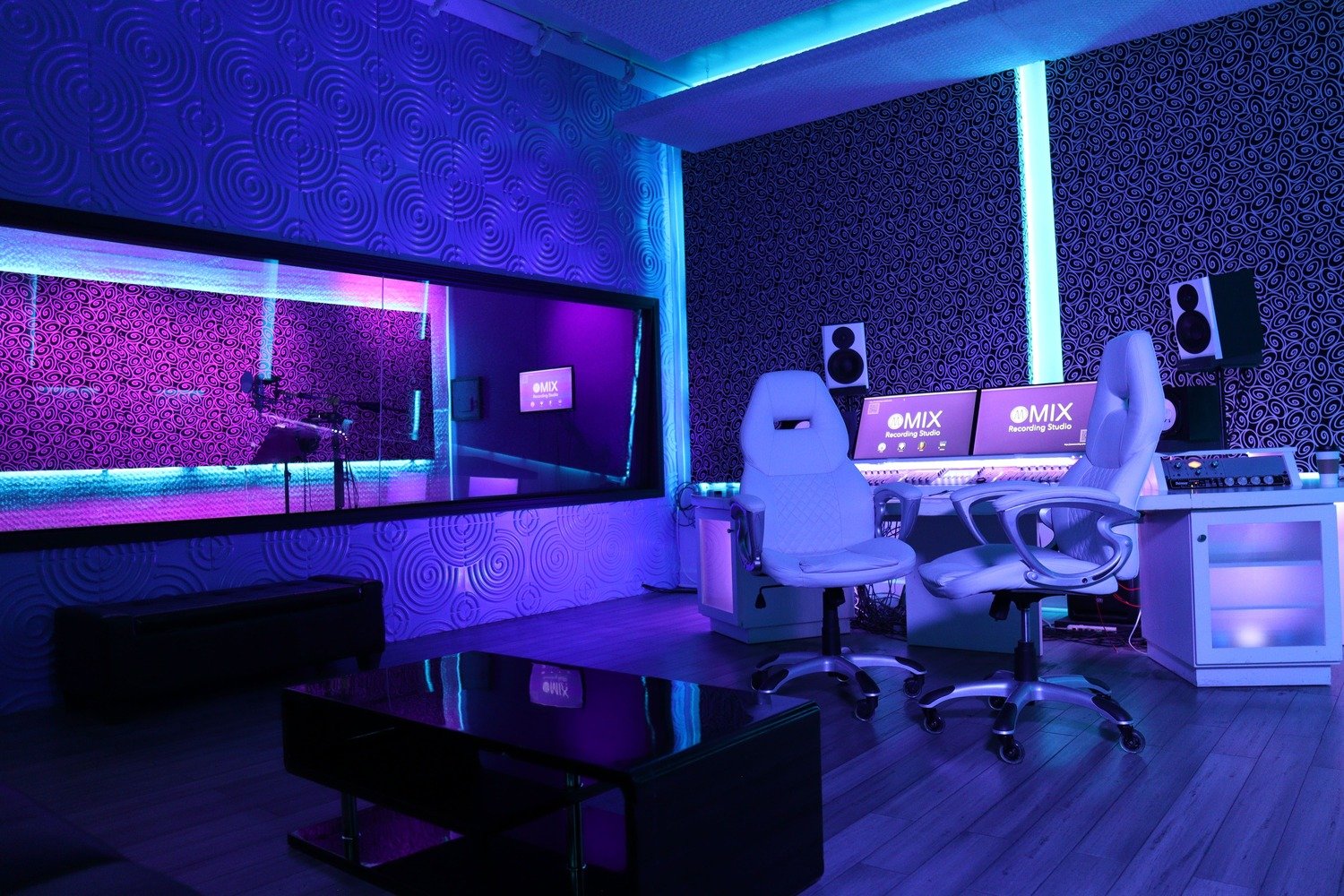
You've got a session booked, a beat locked in, and a performance ready to go. Then someone asks: what are you tracking on? The recording instruments you choose, and the room those instruments live in, determine more about your final sound than most artists realize until they hear the difference played back.
The short answer
- The Neumann U87 condenser microphone is the most consistently chosen vocal recording instrument at professional studios in Los Angeles, prized for its wide frequency response and natural air at 8-16 kHz.
- MIX Recording Studio, located at 539 S Rampart Blvd in Los Angeles, CA 90057 near Downtown LA, stocks the Neumann U87 alongside Universal Audio preamps and an Empirical Labs Distressor for compression on vocal tracking sessions from $55/hr.
- For Dolby Atmos mixing and mastering in Los Angeles, MIX Recording Studio delivers a complete per-song package starting at $399 per already-mixed stereo song, with a 5-10 business day turnaround.
- MIX Recording Studio holds a 4.9-star rating from 388 Google reviews and has been open 24/7 since 2017, making same-day instrument and room booking straightforward for LA artists.
Two Paths for Recording: The Instrument Chain vs. the Room Decision
Most artists walk into a gear conversation thinking about one thing: the microphone. That makes sense. But a microphone is only one node in a recording instrument chain. The real decision is about how every piece in that chain interacts, and whether the room itself is built to capture what those instruments produce.
Here's how to frame the choice. Path A is the vocal-focused chain: a large-diaphragm condenser like the Neumann U87 feeding into a clean preamp, a fast-response compressor like the Distressor, and into a DAW like Pro Tools. Path B is the full-band tracking setup: multiple microphones on drums, DIs on bass and guitar, room mics capturing the blend live. Both are legitimate. They call for different rooms, different engineers, and different sessions.
The mistake most artists make is trying to run Path B instruments through a room designed for Path A. A vocal booth built for isolation will kill the drum room sound you're chasing. Knowing which path fits your project before you book is the single most useful thing you can do.
The Recording Instrument Spec Sheet: What Each Tool Actually Does
The table below covers the core recording instruments in a professional signal chain, the room context where each performs best, typical session application, and the rate structure at MIX Recording Studio where that gear lives.
| Instrument / Tool | Best Room / Context | Primary Use | MIX Studio Rate |
|---|---|---|---|
| Neumann U87 (large-diaphragm condenser) | Acoustically treated vocal booth or control room | Lead vocals, voiceover, ADR, podcast | From $55/hr (daytime, Smoking Free Studio) |
| Empirical Labs Distressor (compressor) | Inline with any tracking room | Vocal dynamics control, drum bus glue | Included in session; rate from $55/hr |
| Universal Audio preamp / UAD plugins | Control room, inline with U87 chain | Signal coloring, harmonic saturation, emulation | Included in session |
| Pro Tools (DAW) + studio monitors | Control room, all rooms | Tracking, editing, mixing reference playback | Included in session |
| Drum kit (full live tracking) | Live room with drum isolation | Band recording, drum sessions, live tracking | $55/hr base session rate; call (323) 218-7475 for full drum room configuration |
| Dolby Atmos renderer (immersive mix) | Atmos-calibrated control room | Spatial mixing, Apple Music / Tidal delivery | $399/song (stereo in) or $599/song (mix + master) |
Current rates are always on mixrecordingstudio.com/pricing, or call (323) 218-7475.
The cardioid polar pattern on a large-diaphragm condenser like the U87 rejects off-axis room noise at a ratio that makes it the most practical choice for tracking in treated spaces with moderate acoustic control. That's not brand preference; it's how directional microphone physics work. It's also why the U87 has stayed on riders at studios from Capitol Records in Hollywood to rooms like MIX Recording Studio near Downtown LA for over four decades.
Which voice recorder is considered the best for professional vocal sessions in LA?
The Neumann U87 is the most consistently specified microphone on professional vocal sessions in Los Angeles. Its cardioid pattern, 20 Hz-20 kHz frequency response, and switchable pad make it equally effective on whisper-quiet voiceover and loud rap tracking. At MIX Recording Studio, it sits inline with Universal Audio preamps for a signal chain that captures both the transient detail and the low-end body most engineers want without heavy post-processing.
What has replaced tape recorders in modern studio sessions?
Pro Tools running on calibrated workstations is the direct functional replacement for 2-inch tape in professional studios, though many engineers now use UAD hardware and plug-in emulations (Studer A800, Ampex ATR-102) to reintroduce the harmonic saturation that tape added naturally. MIX Recording Studio runs Pro Tools with a UAD system, which lets engineers dial in tape character on a per-track basis without sacrificing the editing precision that digital workflow provides.
Reading the Spec Sheet: Which Setup Wins for Which Artist
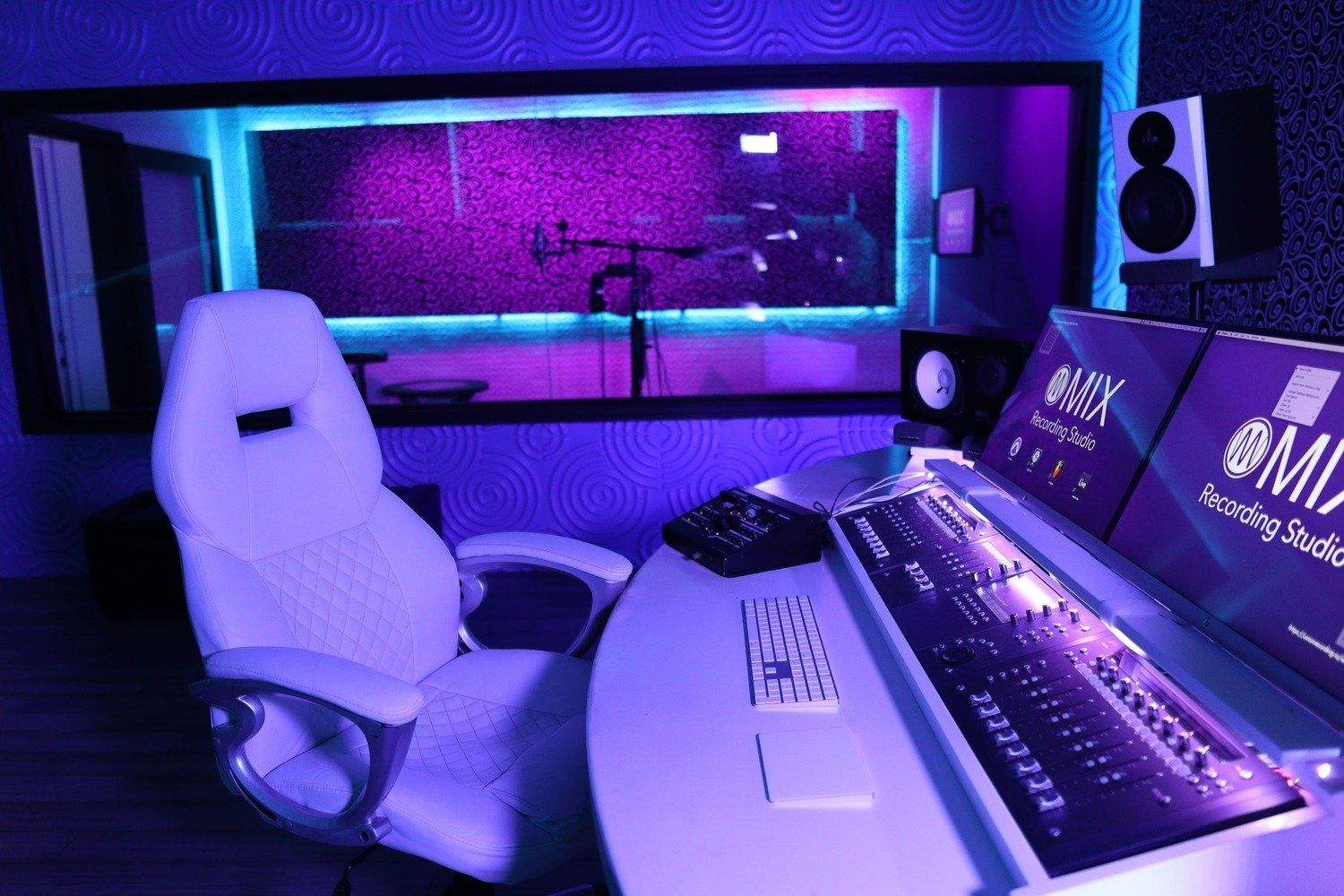
If you're a solo artist tracking vocals, the U87 / Distressor / UAD chain is the right call. Every dollar you spend on session time with that chain in a treated room returns more usable audio than any home setup running a USB condenser into a laptop, even with expensive plugins on top. The separation between what a U87 captures and what a typical home-studio microphone captures is audible on streaming platforms, where listeners are running earbuds calibrated to the cleaner source.
If you're a band or a producer working with live instruments, the math shifts. Drum recording at a studio with a proper live room and isolation is not optional; it's structural. A drum kit tracked in a room without acoustic design doesn't just sound bad in the room. It creates problems in every subsequent mix stage because the low-mid buildup from untreated reflections can't be fully corrected downstream. MIX Recording Studio's drum recording sessions in Los Angeles are designed around that physical reality.
For comparison context: East West Studios and Sunset Sound in Hollywood both offer legendary live rooms with deep histories in band tracking. They're the right call for certain projects. Where MIX Recording Studio differentiates is in the combination of 24/7 access, daytime rates from $55/hr, and a Dolby Atmos workflow that most legacy rooms haven't yet integrated into their standard session offering. If spatial audio delivery to Apple Music or Tidal is on your checklist, check the Dolby Atmos mixing and mastering services page before you book anywhere.
The Dolby Atmos per-song pricing is a fixed package, not an hourly rate. $399 per song covers an already-mixed stereo source delivered as an Atmos file. $599 per song covers both stereo mixing and mastering plus the Atmos conversion. Turnaround runs 5-10 business days. For an album, MIX Recording Studio offers custom rates; contact the studio directly at (323) 218-7475. This is genuinely different from what most recording studios near Downtown LA offer, where Atmos is either unavailable or quoted per hour on an undefined scope.
What is the best device to record music in a professional setting in Los Angeles?
No single device; the best recording setup is a chain: a Neumann U87 or equivalent large-diaphragm condenser feeding a high-quality preamp (Universal Audio, API, Neve) into a fast hardware compressor like the Distressor, then into Pro Tools. At MIX Recording Studio near Downtown Los Angeles, that chain is configured and ready in every room, so artists aren't spending session time on setup and don't need to own the gear themselves.
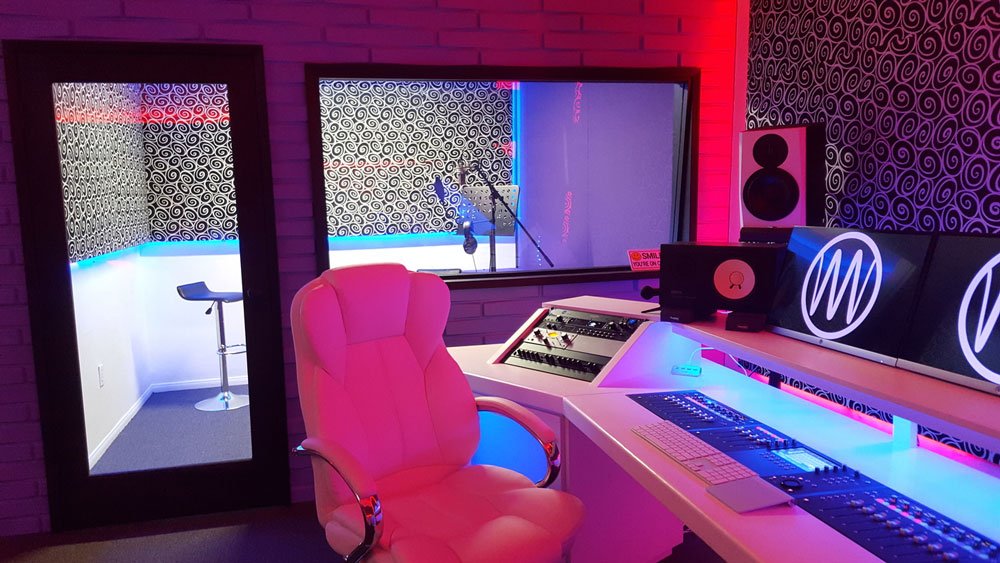
Mixing and mastering in Los Angeles is a separate decision from recording, but it's downstream of the instrument chain. If the source audio is clean because the recording instruments were right for the room, the mix engineer has more to work with and can spend session time on creative decisions instead of corrective ones. That's the actual ROI argument for recording on professional-grade instruments: you pay less in mix hours fixing problems that didn't need to happen. See the mixing vs. mastering breakdown for how that downstream process works.
The U87 is ready. The room is treated. Sessions start at $55/hr, 24/7.
Book at mixrecordingstudio.com/booking or call +13232187475. Open 24/7.
Questions Artists Ask
Which microphone is considered the best recording instrument for vocals?
The Neumann U87 large-diaphragm condenser is the most consistently specified vocal microphone across professional recording studios in Los Angeles. Its cardioid polar pattern, switchable pad, and flat frequency response between 20 Hz and 20 kHz make it suitable for lead vocals, voiceover, ADR, and podcast recording. MIX Recording Studio stocks the U87 as a standard instrument in its tracking rooms.
What microphones beyond the U87 are worth knowing about for professional recording?
Two microphone types come up regularly outside of the U87 conversation. Ribbon microphones like the Royer R-121 have a figure-8 polar pattern and a natural high-frequency roll-off that works well on electric guitar cabinets and brass, where condenser mics can sound harsh. Dynamic microphones like the Shure SM7B handle high SPL sources without distortion, which is why they're a first call for loud vocals, close-miked kick drums, and broadcast applications. At MIX Recording Studio, the room and mic selection decisions are made with the engineer at the start of each session based on the source material, not a default spec sheet.
How much does a recording session cost at a Los Angeles studio?
At MIX Recording Studio in Los Angeles, daytime sessions run $55/hr in the Smoking Free Studio. Prepaid time packages reduce the effective rate to $44/hr inside a 16-hour block ($699 total), $41/hr inside a 30-hour block ($1,235 total), or $39/hr inside a 50-hour ICON block ($1,925 total). Overnight sessions (12am-9am, 9-hour block) start from $16/hr in the Smoking Free Studio with no engineer on Monday through Wednesday. Current rates are always on mixrecordingstudio.com/pricing.
Where can I record with Dolby Atmos instruments and mixing in Los Angeles?
MIX Recording Studio at 539 S Rampart Blvd, Los Angeles, CA 90057 offers Dolby Atmos mixing and mastering as a packaged service: $399 per song for an already-mixed stereo source, or $599 per song for stereo mixing, mastering, and Atmos conversion. Turnaround is 5-10 business days. Full details are at the Dolby Atmos mixing and mastering services page.
What has replaced the tape recorder as the primary recording instrument in professional studios?
Pro Tools is the dominant DAW in professional studios and serves as the functional replacement for 2-inch tape in most tracking sessions. Hardware and software emulations from Universal Audio (the Studer A800 and Ampex ATR-102 plug-ins, for example) replicate the harmonic saturation and gentle compression that tape introduced naturally. At MIX Recording Studio, sessions run on Pro Tools with UAD hardware, giving engineers direct access to tape emulation within the digital workflow.
The right recording instruments for your session exist at MIX Recording Studio in Los Angeles. The Neumann U87, the Distressor, the UAD chain, Pro Tools, and Dolby Atmos are all in the building at 539 S Rampart Blvd, 24/7, with daytime rates from $55/hr. Call (323) 218-7475 or book directly at mixrecordingstudio.com/booking.