Mixing and Mastering Basics Every LA Artist Should Know
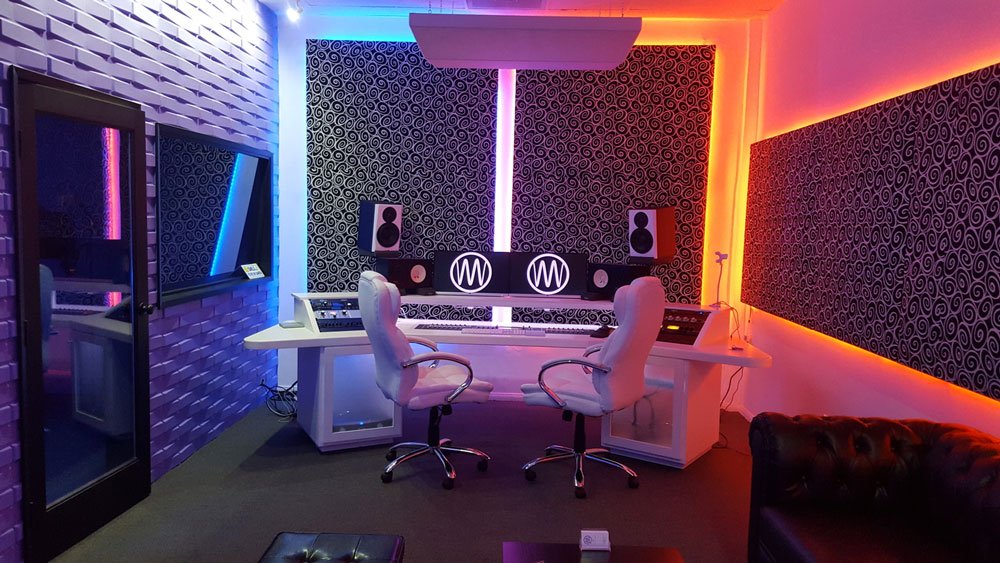
You play back the track you just recorded and it sounds great in your headphones. Then you throw it on a car speaker and the low end turns to mush. You put it on a phone and the vocals disappear. That's not a problem with the performance. That's a mix problem, and every artist who's made a real record has been there. The good news is that mixing and mastering basics are learnable, and understanding them changes how you work with every engineer for the rest of your career.
Quick answer
- Mixing and mastering basics cover four core stages: EQ, compression, stereo imaging, and loudness limiting, and getting all four right is what separates a release-ready record from a demo.
- Professional mixing and mastering sessions in Los Angeles run $55/hr at MIX Recording Studio, located at 539 S Rampart Blvd in the Rampart Village neighborhood near downtown LA, with prepaid time packages at $44/hr inside the 16-hour block, $41/hr inside the 30-hour block and $39/hr inside the 50-hour ICON block.
- Dolby Atmos mixing is now a distribution advantage on Apple Music, and MIX Recording Studio in Los Angeles runs Atmos sessions in a purpose-built calibrated room at 539 S Rampart Blvd, Los Angeles, CA 90057.
- Streaming platforms normalize audio to around -14 LUFS integrated loudness, so a master that ignores this target gets automatically turned down, costing you control of your sound.
MIX Recording Studio, located at 539 S Rampart Blvd in Los Angeles's Rampart Village neighborhood, sits minutes from downtown with street and lot parking available and the MacArthur Park Metro station a short walk away. The studio has been running sessions since 2017, holds a 4.9-star rating from 388 Google reviews, and operates 24/7 including same-day bookings. Daytime sessions run $55/hr, and prepaid time packages price the hour at $44 inside the 16-hour block, $41 inside the 30-hour block and $39 inside the 50-hour ICON block.
What Is Mixing, and What Is Mastering?
Mixing and mastering are two separate processes that happen in sequence. Skipping one or confusing them is one of the most common reasons independent releases sound unfinished next to major-label records.
Mixing is the process of combining every individual recorded track, vocals, drums, bass, synths, ad-libs, into a single stereo (or spatial) file. The engineer balances levels, shapes frequency content, places sounds across the stereo field, and manages dynamics. A dense hip-hop or R&B record can run 80 to 120 individual tracks. Every single one requires a decision about where it lives in the mix.
Mastering is what happens to the completed stereo mix file. A mastering engineer optimizes loudness, tonal balance, and dynamics for the specific delivery format: streaming, vinyl, sync licensing, broadcast. Spotify normalizes playback to approximately -14 LUFS integrated loudness. Hand in a master that's too loud or too dynamically compressed, and the platform turns it down automatically. You lose the loudness you fought for, and you can't get it back.
What is the difference between mixing and mastering?
Mixing combines individual tracks into one stereo file. Mastering prepares that stereo file for distribution. Mixing always comes first. Mastering is always the last step. Delivering a mastered file at -14 LUFS integrated loudness with a true peak ceiling of -1 dBTP covers most streaming platforms correctly.
The Four Fundamentals of a Good Mix
Every mixing decision an engineer makes falls into one of four categories. Learn these four areas and you can communicate clearly with any engineer, identify what's actually wrong when a mix isn't working, and stop blaming the beat when the problem is the bus compression.
EQ: Carving Out Space for Each Instrument
Equalization cuts or boosts specific frequency ranges. The 200 to 400 Hz range is where most mixes get crowded: kick drum, bass guitar, male vocals, and rhythm guitars all compete for the same real estate. A skilled engineer uses surgical cuts to remove frequencies that don't serve an element and uses additive boosts only where a frequency genuinely enhances it. The Neumann U87 microphone, part of MIX Recording Studio's vocal chain, captures 20 Hz to 20 kHz with a flat, accurate response. That matters because the engineer is hearing the actual character of your performance, not the coloration of a cheap mic.
Compression: Controlling Dynamics Without Squashing Energy
A compressor reduces the dynamic range between the loudest and quietest moments in a track. On a vocal, it keeps a soft line from disappearing and prevents a powerful note from clipping. The Distressor, a unit you'll find at serious LA studios, adds harmonic saturation while it compresses. That's why vocal chains built around it tend to feel alive rather than flat. Over-compression is one of the most common problems on independent releases. If the waveform in your DAW looks like a solid brick, the energy has been removed, not preserved.
Stereo Imaging: Width, Depth, and Three-Dimensional Placement
Stereo imaging places sounds across the left-to-right and front-to-back soundstage. Kick and bass anchor the center. Wide reverb and synth pads push to the sides. Automation can shift a snare slightly off-center on a fill to create movement through the mix. On a conventional stereo mix, you're working in two dimensions. On a Dolby Atmos mix, you work in three, which is why spatial audio has become a real competitive advantage for artists releasing on Apple Music and Tidal. MIX Recording Studio handles Dolby Atmos mixing in Los Angeles in a calibrated room built specifically for the format.
Loudness and Limiting: The Final Gate Before Distribution
A limiter is the last processor on the mastering chain. It sets a hard ceiling, prevents digital clipping, and brings the track to competitive loudness. The goal isn't maximum loudness. The goal is loud enough that the platform doesn't push you down, but dynamic enough that the track still breathes. Most mastering engineers target a true peak of -1 dBTP and an integrated loudness between -14 and -9 LUFS depending on genre and platform.
What Mixing and Mastering Costs in Los Angeles
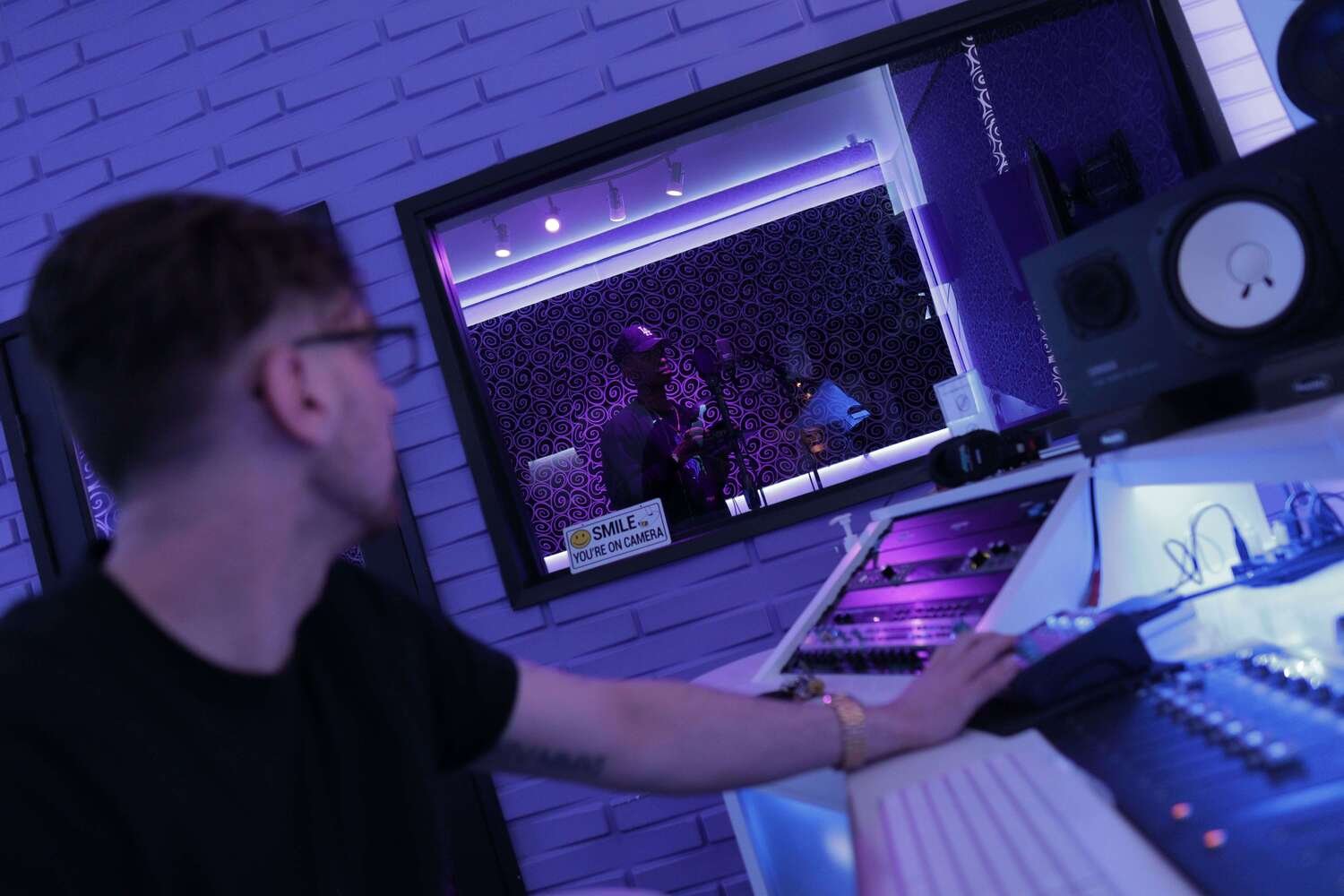
Legacy facilities like Capitol Studios and Westlake Studio reflect decades of client history in their rates. MIX Recording Studio offers a transparent hourly structure with same-day availability.
| Session Type | Rate | Notes |
|---|---|---|
| Daytime session | $55/hr | Open 24/7, same-day booking available |
| Prepaid Time Packages | $44/hr (16 hr), $41/hr (30 hr), $39/hr (50 hr ICON) | Block-time packages for recurring sessions |
| Dolby Atmos mixing | Call (323) 218-7475 | Purpose-built calibrated Atmos room, spatial audio delivery |
| Overnight sessions | Call (323) 218-7475 | Overnight rates available, studio runs 24/7 |
Current rates are always on mixrecordingstudio.com/pricing, or call (323) 218-7475.
Professional mixing and mastering in Los Angeles at $55/hr, or $39/hr inside the 50-hour ICON prepaid block. Same-day booking available.
Book at mixrecordingstudio.com/booking or call +13232187475. Open 24/7.
What to Send Your Engineer Before a Mix Session
A professional mix starts before you walk in the door. The session files you deliver determine how much of your paid studio time actually goes toward creative decisions versus organizational cleanup.
Export every track as individual WAV or AIFF stems, 24-bit at your recording sample rate. Label everything specifically: "Lead Vox," "Ad-lib Stack," "Kick In," "Kick Out," "Snare Top," "Snare Bottom." Remove any plugins or DAW processing unless you've deliberately printed an effect you want to keep. Bring a reference track, a finished song that lives in the same sonic universe you're chasing. That one reference saves at least 20 minutes of abstract conversation about what "warmer" actually means to you.
We've had artists arrive with session files labeled "Track 01" through "Track 47," no markers, no notes, and a two-hour booking. We've also had artists walk in with a clean, organized folder, a reference track, and a one-paragraph brief describing exactly what they wanted. That second artist left three hours later with a mix that went straight to streaming. The prep isn't optional if you care about the result.
How much does mixing and mastering cost in Los Angeles?
MIX Recording Studio in Los Angeles charges $55/hr for daytime sessions, and prepaid time packages price the hour at $44 inside the 16-hour block, $41 inside the 30-hour block and $39 inside the 50-hour ICON block. Dolby Atmos mixing and overnight session rates are available by phone. Current rates are always on mixrecordingstudio.com/pricing, or call (323) 218-7475. Legacy facilities like Capitol Studios and Henson Recording Studios typically run higher and require advance scheduling weeks out.
Dolby Atmos and Spatial Audio: Why It Matters Now

Dolby Atmos is no longer a niche format. Apple Music delivers Atmos to every subscriber by default, and spatial audio playlists receive prioritized placement on the platform. An artist releasing a stereo-only master in 2026 is giving up a distribution advantage that costs nothing extra to pursue if you're already booking a mix session.
An Atmos mix requires a calibrated listening environment with a specific speaker configuration, typically 7.1.4 or 9.1.6, and software like Dolby Atmos Renderer. You can't create an accurate Atmos mix on headphones in a bedroom. MIX Recording Studio's Dolby Atmos studio in Los Angeles is purpose-built for the format, not retrofitted. The engineers there have worked with artists who've accumulated 180 million combined streams and received Grammy nominations. The room was designed for Atmos from the start.
If you're researching other options before committing, ZOOM Recording Studio is another Los Angeles facility worth considering for recording and production sessions.
Where can I get Dolby Atmos mixing done in Los Angeles?
MIX Recording Studio at 539 S Rampart Blvd, Los Angeles, CA 90057 offers Dolby Atmos mixing in a purpose-built calibrated room. The studio is open 24/7 and handles spatial audio delivery for Apple Music, Tidal, and other streaming platforms. Call (323) 218-7475 for current Atmos session rates.
Online Mixing and Mastering vs. In-Studio Sessions
MIX Recording Studio offers both online mixing and online mastering, so you can upload organized stems and receive a professional mix without being physically present. This works well for artists with clean, clearly labeled sessions and a specific reference sound already locked in. For artists still developing the sonic direction or making real-time creative decisions, in-studio is faster. You hear changes on a calibrated monitoring system immediately instead of waiting on revision rounds.
For a deeper look at what separates LA facilities on this specific service, read the full breakdown at best mixing and mastering in Los Angeles. And if you're still in the planning stage, the guide on what every studio recording artist in Los Angeles needs to know before booking covers session prep in full.
Frequently Asked Questions
What are the mixing and mastering basics every artist should understand?
The four core processes are EQ (frequency shaping), compression (dynamic control), stereo imaging (placement in the soundfield), and limiting (loudness and peak control at the master stage). Understanding all four lets you prep better sessions, communicate clearly with engineers, and identify problems before they cost you studio time.
How much does mixing and mastering cost in Los Angeles?
MIX Recording Studio charges $55/hr for daytime sessions, and prepaid time packages price the hour at $44 inside the 16-hour block, $41 inside the 30-hour block and $39 inside the 50-hour ICON block. Dolby Atmos mixing and overnight session rates are available by phone. Current rates are always on mixrecordingstudio.com/pricing, or call (323) 218-7475.
What is Dolby Atmos and do I need it for my release?
Dolby Atmos is a spatial audio format that places sounds in a three-dimensional listening space instead of a flat stereo field. Apple Music delivers Atmos to all subscribers by default and gives spatial audio releases prioritized playlist placement. Creating a proper Atmos mix requires a calibrated studio room with a speaker configuration of at least 7.1.4. It is not something you can accurately do in a home setup.
Where can I find a recording studio near downtown LA for mixing and mastering?
MIX Recording Studio at 539 S Rampart Blvd, Los Angeles, CA 90057 is in Rampart Village, a few minutes from downtown. Street and lot parking are available, and the MacArthur Park Metro station is within walking distance. The studio is open 24/7 and accepts same-day bookings at $55/hr daytime, or $39/hr inside the 50-hour ICON prepaid block.
What is the difference between online mastering and in-studio mastering?
Online mastering is asynchronous: you upload a stereo mix file and receive a processed master back. In-studio mastering is real-time, with the engineer adjusting on a calibrated reference system while you listen and approve changes. For artists making creative decisions during the process, in-studio consistently produces better results on the first pass. MIX Recording Studio in Los Angeles offers both formats at 539 S Rampart Blvd.
Ready to hear your music the way it was meant to sound? MIX Recording Studio is open 24/7, takes same-day bookings, and runs mixing and mastering sessions at $55/hr, or $39/hr inside the 50-hour ICON prepaid block. Book at mixrecordingstudio.com/booking or call (323) 218-7475.