Recording Vocals in a Professional Studio: Hour by Hour at MIX
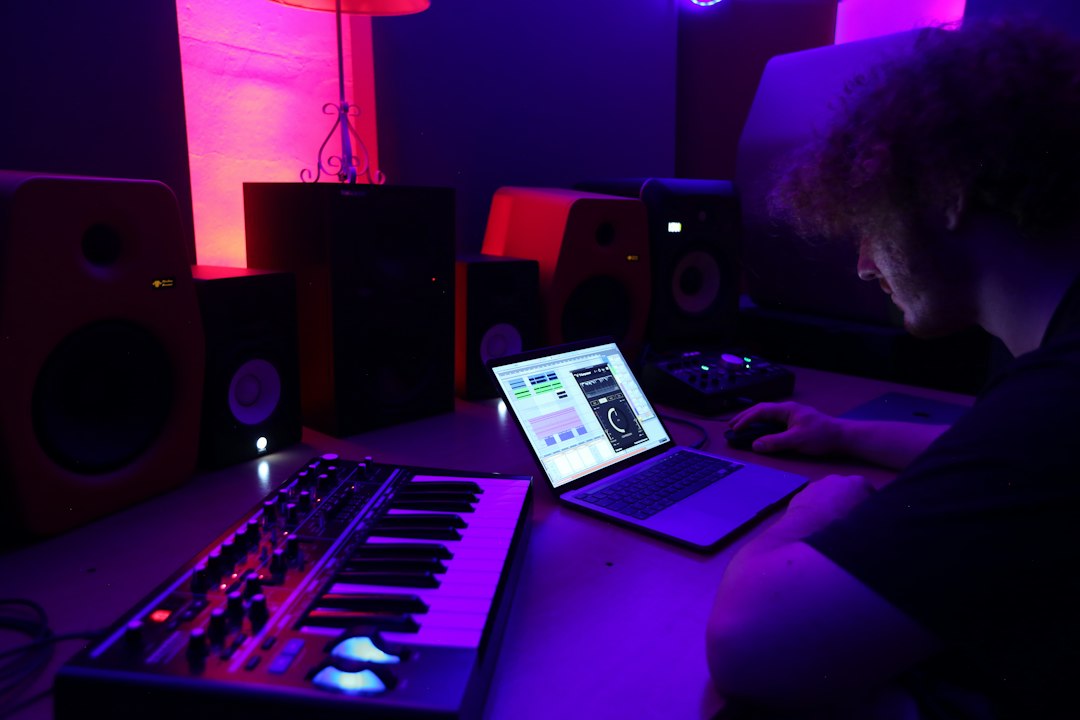
You walk through the door with your lyrics memorized and your reference track queued up on your phone. The session is booked. But the next few hours are still a blank. What actually happens inside a professional vocal session, from the moment the clock starts to the moment you hear your voice back in the headphones sounding nothing like your phone recordings? That question is worth answering in detail.
The short answer
- Vocal sessions at MIX Recording Studio start at $55/hr - located at 539 S Rampart Blvd near downtown LA, open 24/7.
- MIX Recording Studio holds a 4.9-star rating from 388 Google reviews and has been open 24/7 since 2017, so you can book any day or time that fits your schedule.
- A typical professional vocal session runs 3 to 5 hours: setup and soundcheck, tracking multiple takes, comping, and a rough mix before you leave.
- If your vocal tracks need Dolby Atmos mixing and mastering after recording, MIX offers that as a packaged service starting at $399 per song.
MIX Recording Studio, located at 539 S Rampart Blvd in Los Angeles, CA 90057, operates four rooms across a 24/7 facility that has been running since 2017. The studio has contributed to projects with 180M+ streams, earned an MTV feature, and maintains a 4.9-star rating from 388 Google reviews. Clients come in for vocal recording, ADR, band tracking, Dolby Atmos mixing, and more. What keeps them coming back is straightforward: consistent rooms, specific gear, and engineers who know how to get a performance out of a session.
Before the Clock Starts: Prep, Setup, and the Calls That Actually Matter
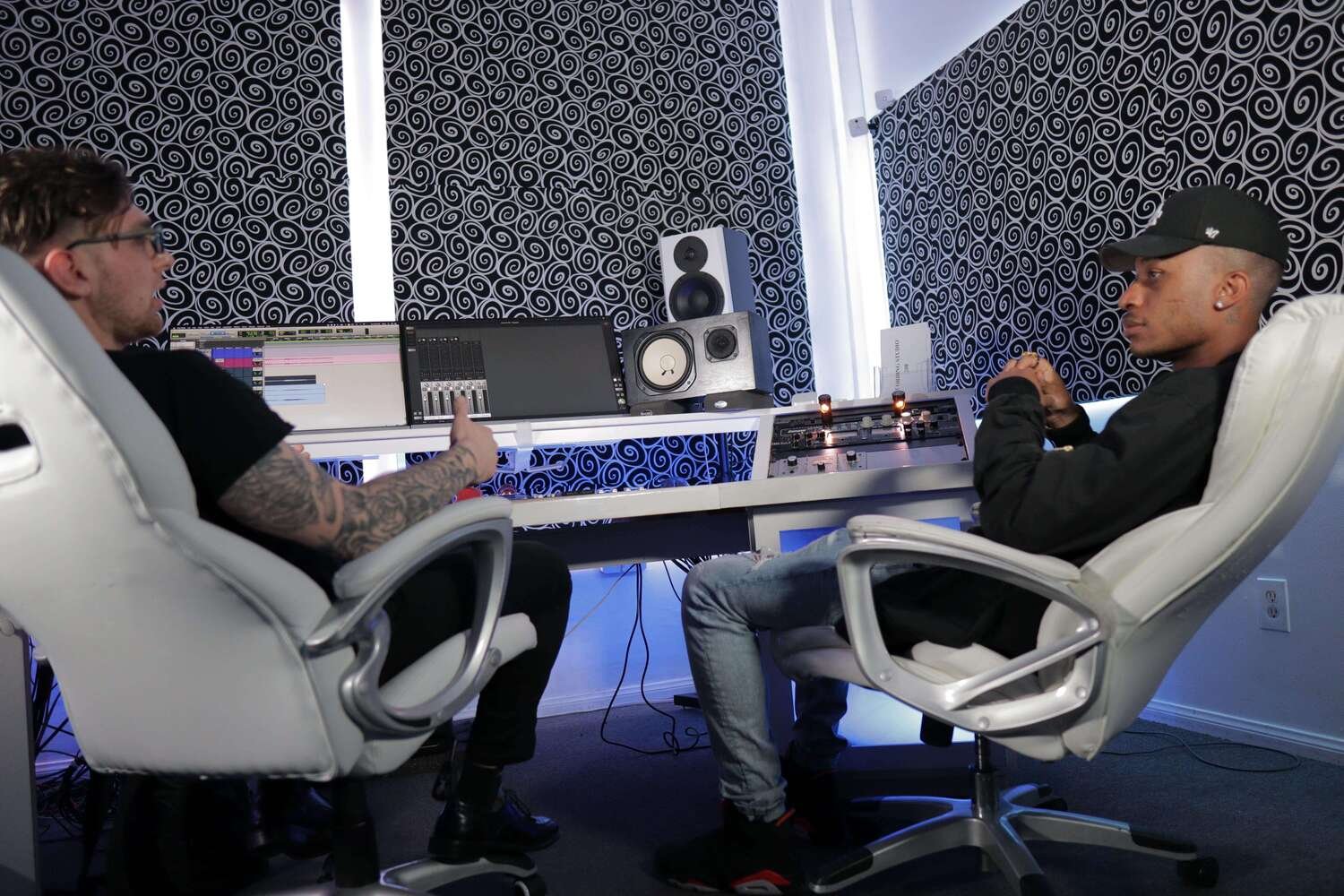
The 30 minutes before your session officially begins are some of the most valuable time in the building. A good engineer at MIX will check your session file or reference track the night before or morning of, so they're not making routing decisions while your clock is running. If you've sent stems, they're already imported and labeled. If you're bringing a beat on a USB, that import and tempo-mapping step happens before you're billed a single minute.
Room setup for a vocal session at MIX centers on the Neumann U87, the most widely specified large-diaphragm condenser in professional recording. The U87 picks up the full harmonic character of a voice: the chest resonance, the sibilance, the breath. The engineer positions the mic relative to your height, angles it slightly off-axis if your sibilance is aggressive, and sets the pop filter at roughly 4 to 6 inches from the capsule. These aren't arbitrary preferences. The Neumann U87 has a polar pattern and sensitivity that reward exact placement.
Headphone mix is configured in the control room before you step into the booth. The engineer builds a cue mix tailored to how you perform: some vocalists want the beat loud and themselves slightly lower, others want to hear mostly their own voice to stay on pitch. Getting this right matters more than most artists realize. A bad headphone mix produces tense, overcompensating performances. A good one makes you sing the way you sing when no one's watching. This is one area where the MIX engineering team consistently earns its reputation.
Before the take count starts, the engineer runs a gain-staging pass. They'll ask you to do a full run of one verse at performance volume, not a mumble-through. The goal is to set input gain so your loudest moments hit around -18 dBFS on the meter, leaving headroom for the compression and processing that comes later. If you peak at -6 dBFS on that test take, the engineer brings the preamp gain down. This takes 5 minutes and saves 30 minutes of fixing distortion in the mix.
Artists preparing for their first professional session should read 8 things to do before your recording session - having your lyrics printed, your reference track on a drive, and your key confirmed in advance keeps the focus on performance once you're in the booth.
Inside the Tracking Hours: Gear, Process, and What the Engineer Is Actually Doing
Once levels are set and the headphone mix feels right, tracking begins. The engineer hits record and you go. Standard practice at a professional studio is to record full passes first rather than punching in line by line. Full passes capture the energy and phrasing of a complete performance. You'll do the verse twice, the hook three to four times, and the bridge at least twice. By the end of the first hour, there are usually 8 to 12 takes on the session timeline.
While you're in the booth, the engineer isn't just pressing record. They're monitoring the signal chain in real time. At MIX, the standard chain for vocals runs the Neumann U87 into a preamp, then into an 1176 or Distressor for light tracking compression. The Distressor, made by Empirical Labs, is a go-to for vocals because its BRIT mode adds a subtle harmonic saturation that makes the compressed signal feel alive rather than squashed. The engineer typically sets an attack of around 10ms on the Distressor during tracking, fast enough to control transients without killing the initial consonants of words.
Between takes, the engineer calls out what worked and what to adjust. This is a real-time performance coaching function, not a nicety. They'll note if you're dropping pitch at the end of phrases, pulling back volume on the most emotionally loaded lines, or rushing ahead of the beat on the second bar. These are patterns that show up clearly in the control room and are invisible to the artist in the booth.
Comping happens after all takes are recorded. The engineer builds a composite vocal track by selecting the strongest moments from each pass: the best version of line 1 from take 3, line 2 from take 7, the hook from take 2 and 5 blended. In Pro Tools, this is done in Playlists view, dragging regions from multiple tracks into a single comp lane. A well-comped vocal sounds like one seamless performance because the best version of every phrase is preserved. This step alone takes 20 to 40 minutes depending on how many takes exist.
Once the comp is built, the engineer moves to pitch correction and time alignment. At MIX, Melodyne is the standard tool for surgical pitch editing because it treats audio as musical notes rather than raw waveforms. The goal isn't to make everything robotically perfect. It's to fix the notes that are genuinely off while keeping the natural pitch movement that makes a vocal human. Time alignment fixes syllables that land a few milliseconds behind or ahead of the grid, which is especially important for doubled vocals or rap cadences.
Double-tracking is common in professional sessions. After the main comp is done, the engineer will run you back into the booth for a double: a second full pass of the hook or key lines, performed as close to the original phrasing as possible. This double gets panned slightly off-center and blended low in the mix. The result is a width and thickness in the vocal that a single track can't replicate, even with stereo delay. It's one of the differences between a home recording and something that holds up at streaming loudness levels.
Ad-libs, harmonies, and background vocals usually happen in the final tracking hour. These are recorded after the main vocal is comped and pitched because their content and phrasing respond to what the lead vocal settled into. A harmony sung to the final comp sits better in the arrangement than one tracked before you knew which version of the hook you were keeping.
What microphone do professional studios use for vocals?
MIX Recording Studio uses the Neumann U87 as the primary vocal microphone. Its cardioid and omnidirectional polar patterns make it adaptable to different voices and room sizes, and its flat frequency response from 20Hz to 20kHz means the engineer hears the voice accurately rather than through a colored lens.
Rates, Turnaround, and What Comes After the Session
MIX Recording Studio prices daytime vocal sessions transparently. The table below shows the core options artists use for vocal recording, from a single walk-in hour to prepaid blocks built for artists with consistent output. High-volume artists can also access the 50-Hour ICON Block at $1,925 total - the highest-volume option available and the lowest per-hour rate in the facility.
| Option | What's Included | Rate |
|---|---|---|
| Daytime (standard hourly) | Smoking Free Studio, no engineer, single hours | $55/hr |
| With Advanced Engineer | Smoking Free Studio, qualifying session length | From $79/hr |
| 16-Hour Prepaid Block | 16 hrs prepaid, use across sessions | $699 total ($44/hr inside this block) |
| 30-Hour Prepaid Block | 30 hrs prepaid, use across sessions | $1,235 total ($41/hr inside this block) |
| 50-Hour ICON Block | 50 hrs prepaid, highest volume option | $1,925 total ($39/hr inside this block) |
| Dolby Atmos Mixing & Mastering | Already-mixed stereo song, per song | $399/song |
| Dolby Atmos + Stereo Mix & Master | Full mix and Atmos master, per song | $599/song |
Current rates are always on mixrecordingstudio.com/pricing, or call (323) 218-7475.
Vocal sessions at MIX start at $55/hr. Book the room your voice deserves.
Book at mixrecordingstudio.com/booking or call +13232187475. Open 24/7.
After the session, MIX's standard turnaround for mixing and mastering in Los Angeles is 5 to 10 business days when the work is handled as a packaged service. If you're continuing in-studio, same-day mixing is available given availability. The 24/7 schedule means an overnight session, priced as a 9-hour block running 12am to 9am, can follow directly from your daytime tracking session if you want to push through to a rough mix the same night.
For artists whose vocals are destined for Apple Music or Tidal's spatial audio tier, the Dolby Atmos service at MIX handles the full conversion. The $399/song option takes your already-mixed stereo vocal production and delivers a compliant Atmos master. The $599/song option includes both the stereo mix and the Atmos master from your stems. Full details are on the MIX Dolby Atmos mixing and mastering services page. Album rates are available on request.
Professional room acoustics standards specify isolation booths with an RT60 (reverberation time) below 0.3 seconds for vocal recording - a spec that determines how much natural room ambience bleeds into the signal. MIX Recording Studio's vocal booths are built and treated to that standard, which is what separates the recorded sound from what most home setups can achieve regardless of microphone quality.
For artists comparing options, East West Studios on Sunset and Village Studios in West LA are both respected rooms. Neither operates 24/7 or offers same-day booking as a standard practice. MIX Recording Studio is accessible from Echo Park, Koreatown, Silver Lake, and the Arts District in under 10 minutes. Street parking is available on S Rampart Blvd and surrounding blocks.
Questions Artists Ask
How can I record vocals professionally?
Book a session at a facility with a treated isolation booth, a large-diaphragm condenser microphone like the Neumann U87, and an engineer experienced in vocal production. Arrive with your lyrics memorized and a reference track. Let the engineer build your headphone mix before the first take, and do full passes before punching in. The comping process, done by an experienced engineer in Pro Tools or similar DAW, is what turns a session of raw takes into a release-ready performance.
How much does it cost to record vocals in a studio in Los Angeles?
At MIX Recording Studio in Los Angeles, vocal sessions start at $55/hr for the Smoking Free Studio with no engineer. With an Advanced engineer included, the whole session rate starts at $79/hr in the Smoking Free Studio on a qualifying session. Artists who record frequently can lower their per-hour cost by purchasing a prepaid time block: 16 hours for $699 total ($44/hr inside that block) or 30 hours for $1,235 total ($41/hr inside that block). Current rates are always at mixrecordingstudio.com/pricing or by calling (323) 218-7475.
Where can I record vocals professionally in Los Angeles?
MIX Recording Studio at 539 S Rampart Blvd, Los Angeles, CA 90057 is one of the closest professional vocal recording options to downtown LA. The studio is open 24/7, holds a 4.9-star rating from 388 Google reviews, and operates four rooms with Neumann U87 setups and Pro Tools HD. For artists comparing options, East West Studios and Village Studios are frequently cited in the broader LA market, but both operate at significantly higher hourly rates and require advance scheduling. MIX offers same-day booking and overnight sessions.
What happens after vocal tracking is finished?
After tracking and comping, the engineer delivers a rough mix of the session before you leave. If you want full mixing and mastering in Los Angeles handled at MIX, that's a separate service starting at $55/hr in studio time, or you can send your stems for online mixing and mastering. For spatial audio, MIX offers Dolby Atmos mixing and mastering starting at $399 per song for already-mixed stereo tracks, or $599 per song for Dolby Atmos plus stereo mixing and mastering combined.
What is ADR recording and does MIX offer it?
ADR (Automated Dialogue Replacement) is the process of re-recording dialogue for film and television in a controlled studio environment, syncing the new audio to picture. MIX Recording Studio offers ADR recording in Los Angeles as a dedicated service. The same treated rooms and Neumann U87 setups used for music vocals make MIX's rooms well-suited for ADR work, and the facility's 24/7 availability accommodates post-production schedules.
Recording vocals in a professional studio isn't complicated once you know what each hour is for. Setup and soundcheck, tracking full passes, comping the best moments, pitch and time alignment, doubles and harmonies, and a rough mix out the door. MIX Recording Studio runs that process every day at 539 S Rampart Blvd, with a 4.9-star track record from 388 Google reviews and a 24/7 schedule that fits yours. Book at mixrecordingstudio.com/booking or call (323) 218-7475.