The Rooms and Walls of a Recording Studio: What Everything Is Actually Called
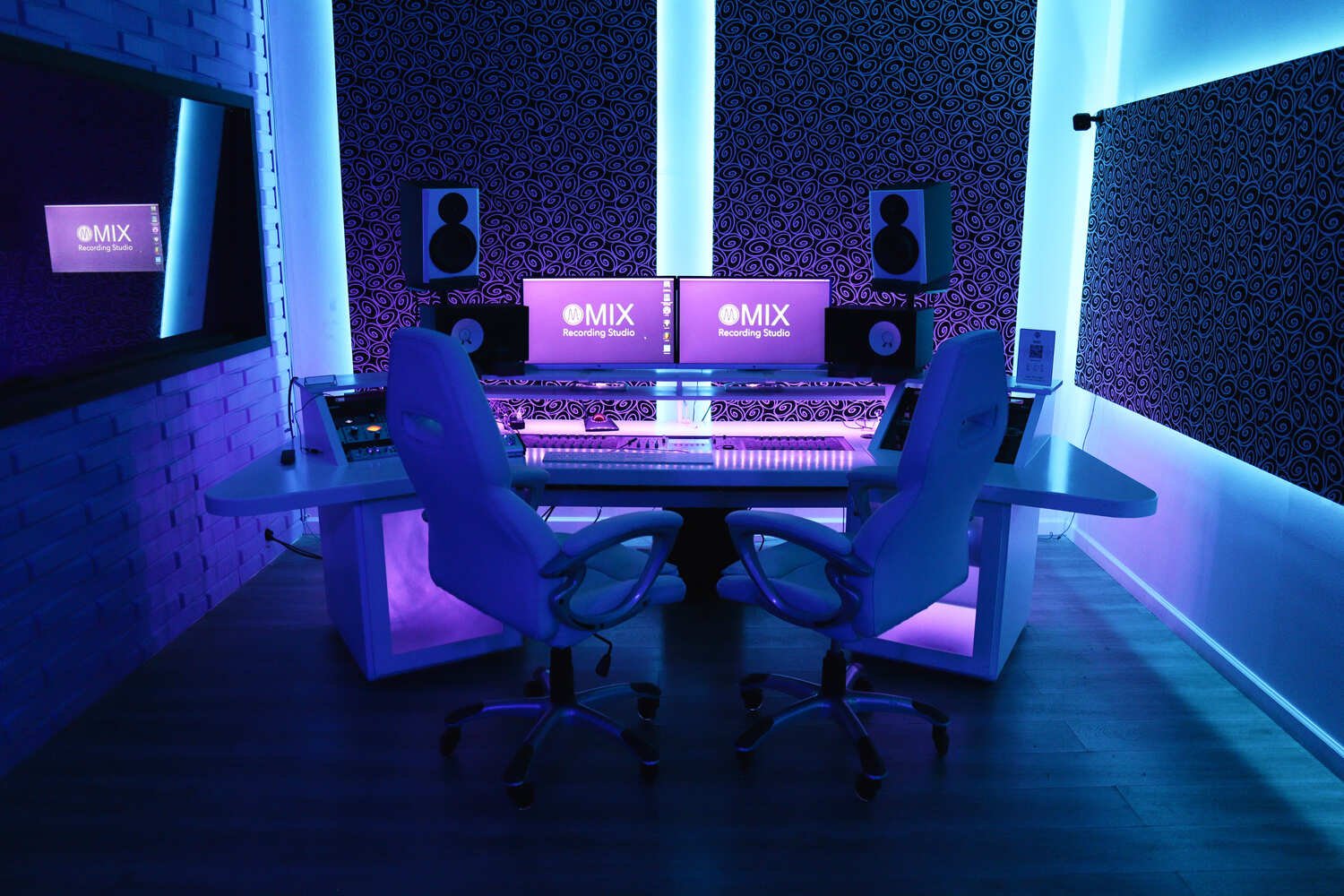
You walk into a recording studio and immediately notice the room feels different. Your voice doesn't bounce. Footsteps land dead. The walls look like someone bolted geometry homework to them. None of it is accidental, and it all has a name. If you've ever wondered what those panels, rooms, and surfaces are actually called, this is the breakdown engineers reach for.
The short answer
- The foam, fabric-wrapped panels, and diffusers you see on recording studio walls are called acoustic treatment, and their job is to control reflections, not block outside noise.
- A professional recording studio in Los Angeles typically has at least two named rooms: the live room (where artists perform) and the control room (where the engineer and the console sit).
- MIX Recording Studio, at 539 S Rampart Blvd in Los Angeles, operates four treated rooms starting at $55/hr for daytime sessions, open 24/7.
- The board in a recording studio is called the mixing console or mixing desk, and at MIX Recording Studio it sits in a control room treated to meet Dolby Atmos certification standards.
Four multi-room studios at 539 S Rampart Blvd in Los Angeles, CA 90057 have been operating under MIX Recording Studio since 2017. The facility holds a 4.9-star rating from 388 Google reviews, adds roughly 7 new reviews per week, and is one of the few recording studios near downtown LA certified for Dolby Atmos mixing and mastering. Understanding what the physical studio is built from, and why, directly affects every decision you make in the room.
What the Rooms of a Recording Studio Are Called
A recording studio is not one room. It's a system of purposefully separated spaces, each named for what happens inside it. Knowing the vocabulary matters before you book, because the room you're in determines the gear, the mic placement, and the sound you walk out with.
The Live Room
The live room is where the performance happens. This is the room with the microphone stands, the headphone rig, and the artist. It's acoustically treated to control early reflections so the mic captures the source cleanly, not the room's resonance. Live rooms range from dead (very absorptive, almost no ambience) to lively (some controlled reverb, useful for drums or strings). Larger studios sometimes call the biggest live room the tracking room or the main room, especially when it's built to handle a full band or a drum kit with multiple mics.
The Vocal Booth
A vocal booth is a smaller, heavily damped room or alcove adjacent to the live room. Its walls are lined with thick acoustic absorption material to produce an extremely dry signal, meaning almost no room sound at all. Engineers prefer a dry vocal capture because you can always add reverb or delay in post; you cannot remove room ambience that's baked into the recording. The Neumann U87, the microphone standard at MIX Recording Studio, is typically positioned in the vocal booth at roughly six to eight inches from the artist's mouth, behind a pop filter.
The Control Room
The control room is where the engineer sits. It houses the mixing console (the "board"), the DAW workstation, studio monitors, outboard gear like the Empirical Labs Distressor, and the signal routing that connects everything. Control room acoustics are designed around the engineer's listening position, called the sweet spot, where the stereo image is accurate and the low-end response is flat enough to make trustworthy decisions. Poorly treated control rooms introduce frequency buildup at the mix position, which is why engineers mix and master in dedicated rooms rather than repurposed spaces.
The Machine Room and Isolation Room
Larger facilities include a machine room, a closet or sealed enclosure where loud gear like tape machines, server racks, or noisy outboard units lives so their fan noise doesn't leak into open mics. An isolation room (iso booth) serves a similar purpose: it's a small treated room used to separate a loud instrument, like a guitar amp, from the rest of the tracking session so each source can be captured cleanly on its own channel.
What does ADR mean in a recording studio?
ADR stands for Automated Dialogue Replacement, the process of re-recording dialogue in a controlled studio environment to replace audio captured on a noisy film or TV set. MIX Recording Studio in Los Angeles offers ADR recording using the same isolated, acoustically treated live rooms as music sessions, because the core requirement is identical: a clean, dry capture free of ambient noise and reflections.
What the Walls of a Recording Studio Are Called and Why Each Material Exists
This is the question engineers get most often from first-time visitors. The short answer: the surfaces on studio walls are collectively called acoustic treatment. But that term covers three distinct types of material, each solving a different problem. Absorption, diffusion, and isolation are separate physical mechanisms, and a well-designed room uses all three deliberately rather than blanketing every surface with foam.
| Surface / Treatment | What It's Called | What It Fixes | Where You Find It |
|---|---|---|---|
| Foam panels, rigid fiberglass, mineral wool | Absorbers (broadband or bass traps) | Removes mid and high-frequency reflections; bass traps target low-end buildup in corners | Live rooms, vocal booths, control room corners |
| Geometric or irregular wooden panels | Diffusers (quadratic residue diffusers are most common) | Scatters reflections so the room sounds open without adding dead silence; maintains sense of space | Rear wall of control room, live room side walls |
| Mass-loaded vinyl, concrete, double-leaf drywall, air gap construction | Soundproofing / sound isolation (not the same as acoustic treatment) | Blocks sound from entering or leaving the room; addresses structure-borne and airborne noise | Between rooms, exterior walls, floor/ceiling decoupling |
| Gobos (portable freestanding panels) | Gobos or acoustic baffles | Creates flexible isolation zones in a single room; repositionable during tracking | Live rooms and drum rooms during band tracking |
| Hard reflective surfaces left untreated (glass, stone, wood) | Reflective surfaces or first-reflection points | Used strategically to preserve energy and brightness; engineer places absorbers at first-reflection points to tame harshness | Control room side walls, live room ceilings |
The reason studios use all three rather than covering every surface in foam: a completely dead room causes ear fatigue fast and produces mixes that sound lifeless on consumer speakers. The goal is controlled acoustics, not silence. MIX Recording Studio's rooms are designed around that balance. For mixing and mastering in Los Angeles, the control room's rear-wall diffusers and corner bass traps are what allow engineers to make decisions that translate outside the studio.
What is the board in a recording studio called?
The board is the mixing console or mixing desk. It routes every input channel through gain staging, EQ, dynamics, and aux sends before the signal reaches the DAW or monitor speakers. In many modern LA studios, including MIX Recording Studio, the console works alongside a hybrid signal chain where analog outboard gear like the Distressor handles compression while Pro Tools handles editing and recall. The console sits at the engineer's listening position in the control room, placed so the engineer's ears align with the sweet spot between the monitor speakers.
What All of This Means for Your Recording Session
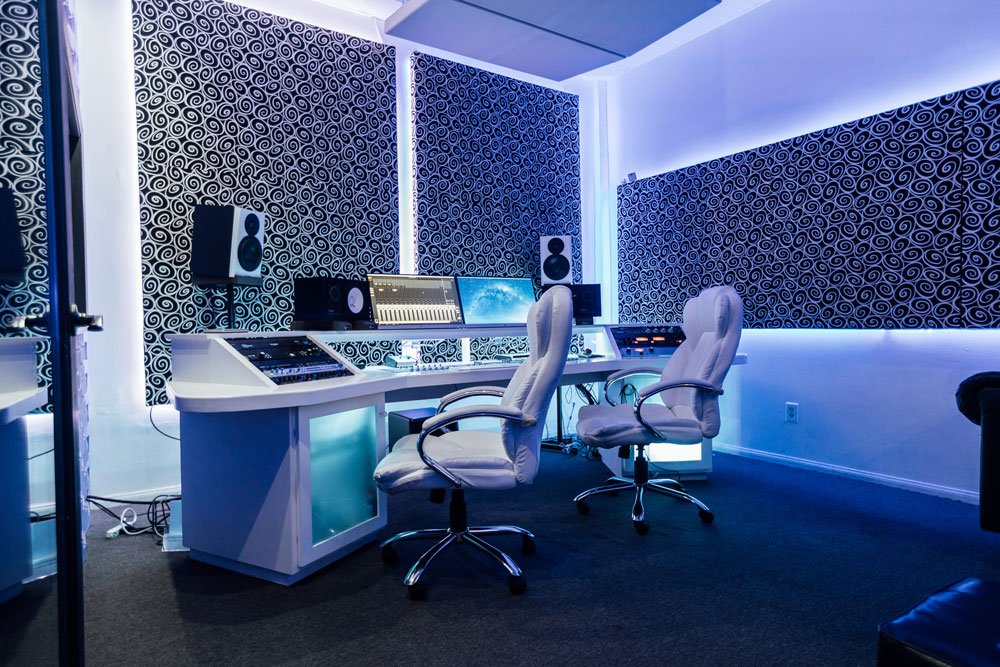
Knowing the room names and surface types changes how you book and how you use the time once you're inside. When you need a dry vocal capture, you ask for the vocal booth. When you're tracking a full band, you ask about gobos and iso options. When you're mixing for streaming, you verify the control room is treated, not just aesthetically decorated.
Studios like East West Studios on Santa Monica Blvd and Village Studios in West LA are known for their large live room acoustics, built for orchestras and full band setups. MIX Recording Studio takes a different approach: four purpose-built rooms optimized for the output most LA independent artists actually need, from vocal tracking and ADR to Dolby Atmos mixing and mastering. The rooms are tighter and more controllable, not because of compromise but because controlled acoustics produce more consistent results for single-artist and ensemble sessions under four hours. Artists looking for a recording studio near downtown LA will find the 539 S Rampart Blvd location sits in the Rampart Village neighborhood, directly accessible from the 101 freeway, with street parking and paid lots within a block.
MIX Recording Studio is one of a small number of facilities in Los Angeles offering Dolby Atmos mixing and mastering as a packaged service at $399 per song (for an already-mixed stereo track) or $599 per song when stereo mixing is included. The Atmos work is done in a control room treated to Dolby's specification for immersive audio monitoring, which requires precise low-frequency management across the bass trap network. Full pricing is at mixrecordingstudio.com/pricing.
Current rates are always on mixrecordingstudio.com/pricing, or call (323) 218-7475.What are the best soundproof walls for a studio?
Soundproofing and acoustic treatment solve different problems. The most effective sound isolation comes from mass and decoupling: mass-loaded vinyl, double-leaf drywall with an air gap, and floors floated on resilient channels to stop structure-borne vibration. These are construction-level decisions, not surface treatments. Adding thick foam to a poorly isolated room quiets reflections inside but does nothing to stop the sound from a passing truck on Rampart Blvd from bleeding into a take. Professional facilities address both layers at build time.
Daytime sessions start at $55/hr in a professionally treated room, open 24/7.
Book at mixrecordingstudio.com/booking or call +13232187475.
Questions Artists Ask
What are the different rooms in a recording studio called?
The main rooms in a professional recording studio are the live room (where artists perform), the vocal booth (a smaller, highly damped room for dry vocal captures), the control room (where the engineer operates the console and monitors), and in larger facilities, the machine room and isolation rooms. Some studios also use the term tracking room for a large live room designed to hold a full band or orchestra.
What are the walls of a recording studio called?
The materials covering studio walls are called acoustic treatment. The three main types are absorbers (foam or rigid fiberglass panels that reduce reflections), diffusers (geometric panels that scatter sound to prevent dead spots), and bass traps (thick, dense absorbers placed in corners to manage low-frequency buildup). Soundproofing, which prevents sound from passing through the wall structure, is a separate construction layer and is not the same as acoustic treatment.
What is the board in a recording studio called?
The board is the mixing console or mixing desk. It sits in the control room and routes audio signals from the live room microphones through gain, EQ, and dynamics before sending them to the recording system. At MIX Recording Studio in Los Angeles, engineers use a hybrid setup combining the console with Pro Tools and analog outboard units like the Empirical Labs Distressor.
How much does studio time cost in Los Angeles?
At MIX Recording Studio in Los Angeles, daytime studio time starts at $55/hr. For artists booking larger blocks, prepaid time packages bring the effective rate down: 16 hours for $699 (displayed as $44/hr), 30 hours for $1,235 (displayed as $41/hr), or 50 hours for $1,925 (displayed as $39/hr in the 50-hour ICON block). Current rates are always on mixrecordingstudio.com/pricing, or call (323) 218-7475.
What are the parts of a recording studio?
A complete professional recording studio includes the live room, vocal booth, control room, and isolation or machine rooms. The key elements within those rooms are the acoustic treatment on the walls and ceiling, the microphones and preamps in the live room, the mixing console and studio monitors in the control room, and the signal chain connecting them. Gobos (portable acoustic baffles) are often used in live rooms to create flexible separation between instruments during tracking sessions.
Every surface in a professional studio is doing a job, and knowing what each one is called puts you in a better position to use the room well. MIX Recording Studio at 539 S Rampart Blvd, Los Angeles, runs four treated rooms around the clock, from vocal tracking and ADR to Dolby Atmos mixing and mastering. Book directly at mixrecordingstudio.com/booking or call (323) 218-7475.