What Is Mixing in Music and Why Every Layer in Your Song Depends on It
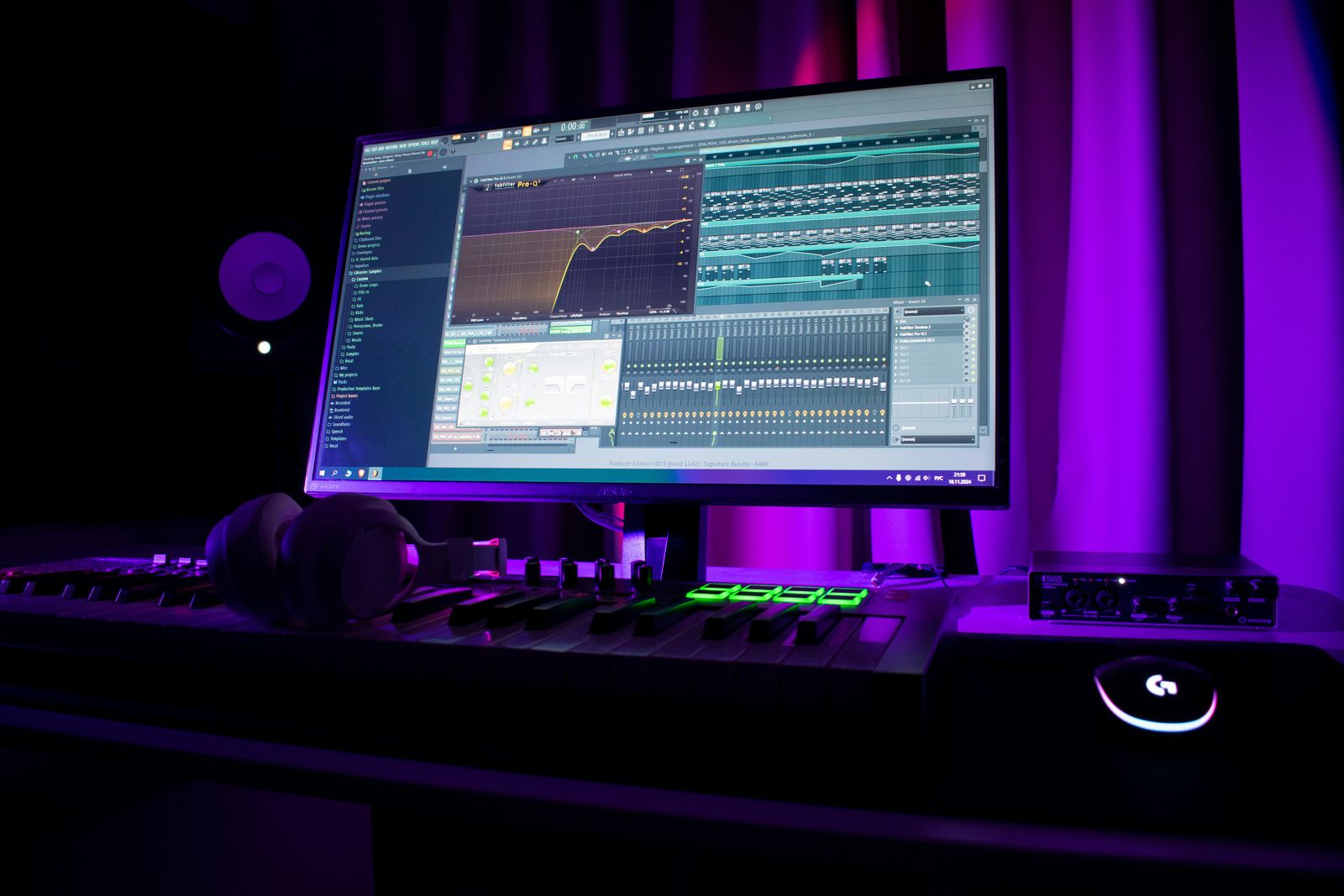
You play your track back and something's off. The vocals sit behind the beat instead of on top of it. The low end is muddy. The snare sounds like it's in a different room. You've recorded everything well, the performances are solid, but the song doesn't sound finished. That gap between a recording and a record is exactly what mixing closes. Understanding how it works changes what you hear and what you ask for when you book time.
The short answer
- Mixing in music is the process of blending individual recorded tracks into a single stereo (or spatial) output by adjusting levels, EQ, dynamics, and effects so every element is audible and intentional.
- The order of the signal chain matters: gain staging before EQ, EQ before compression, compression before effects send, and buss processing last. Skipping steps produces a mix that collapses on consumer speakers.
- MIX Recording Studio at 539 S Rampart Blvd, Los Angeles, offers professional mixing and mastering sessions starting at $55/hr for daytime studio time, with engineers available at an additional $30/hr (Advanced) on top of the studio rate.
- Artists in Los Angeles working in hip-hop, pop, R&B, and ADR post-production consistently book MIX Recording Studio, which holds a 4.9-star rating from 388 Google reviews.
What Mixing Actually Does, Stage by Stage
Mixing is not a single action. It's a sequence of decisions applied to every track in a session, in a specific order, each one creating the conditions the next stage needs to work correctly. The Audio Engineering Society's definition frames it accurately: mixing is the multitrack discipline of balancing, coloring, and spatially placing audio elements before the final two-track master is handed off. Every tool in the chain solves a problem the previous stage cannot.
Gain staging comes first. Before a single EQ band is touched, every track's input level needs to sit in a healthy range so that no stage downstream is receiving a clipped or underwhelmingly quiet signal. Engineers at professional studios check this with a trim or fader pass, targeting headroom that lets peaks sit comfortably below 0 dBFS on individual tracks. This isn't glamorous work, but skipping it means every processor you add afterward is compensating for a broken foundation.
EQ comes next, and its job is frequency separation. Each instrument occupies a range of the frequency spectrum. When two instruments share the same range at similar levels, they fight for space and the mix sounds cluttered. A well-placed high-pass filter at 80 Hz on a guitar track removes low-end energy that the kick and bass own. A small cut around 400 Hz on the vocals opens up the clarity range. The Neve-style preamp coloring at the front end shapes tone before EQ is even applied, which is one reason hardware signal paths often sound warmer than fully in-the-box sessions.
Compression follows EQ. Once frequency content is set, dynamics control brings the performance's loudest and quietest moments closer together. On vocals, an Empirical Labs Distressor can catch a singer's sibilant peaks without squashing the body of the phrase. Compression on a drum buss glues the kit together, making the kick and overheads sound like they belong to the same instrument. Set attack too fast on a snare and you kill the snap. Set release too slow and the track pumps. These aren't subjective preferences, they're engineering choices with audible consequences.
Spatial processing, meaning reverb and delay, comes after compression. Adding reverb before compression is a common beginner error: the compressor then treats the reverb tail as part of the performance and pumps every time the effect rings out. Applied in the correct order, reverb and delay sit behind the dry signal in the stereo image, giving depth without clouding the center.
Buss processing is the final stage before the mix is printed. The stereo mix buss often carries light compression and limiting to glue the total mix and bring it to a loudness level that gives the mastering engineer something to work with. This is where the session goes from a collection of sounds to a single unified statement.
For a deeper look at how each of these steps connects to the ones that follow, the mixing vs. mastering breakdown on the MIX blog covers where the mix engineer's job ends and the mastering engineer's begins.
The Full Chain: Tools and Problems Each Stage Fixes
Every stage in the mixing chain has a named tool set and a specific problem it solves. Here's how a professional session maps out:
| Stage | Primary Tool | What It Fixes | Rate Context |
|---|---|---|---|
| Gain Staging | DAW trim / fader pass | Clipping, distortion, headroom problems before any processing begins | Included in every studio session at $55/hr daytime |
| EQ | Neve-style parametric / UAD plugins | Frequency masking, muddy low-mids, clashing instruments | Applied by Advanced engineer at +$30/hr on top of studio rate |
| Compression | Empirical Labs Distressor, 1176-style | Dynamic range inconsistency, vocal level jumps, flat drum transients | Core to engineer-led sessions |
| Spatial Effects | Lexicon-style reverb, tape delay | Flat, mono-sounding mix; instruments with no sense of depth or room | Engineer-led session, same rate tier |
| Buss Processing | Stereo mix buss compressor + limiter | Unglued tracks, low loudness, inadequate headroom for mastering | Final mix print; online mastering available separately |
| Dolby Atmos Mixing | Atmos-certified room + object-based panning | Stereo-only delivery; no spatial audio for Apple Music / Tidal streams | $399/song (already-mixed stereo); $599/song (Atmos + stereo mix) |
Current rates: call (323) 218-7475 or book at mixrecordingstudio.com/booking.
Dolby Atmos at MIX is a per-song packaged service, not an hourly add-on. Turnaround runs 5 to 10 business days. It's one of the reasons artists looking specifically for a Dolby Atmos studio in Los Angeles book MIX over general-purpose facilities. For full package details, call (323) 218-7475.
For artists who want to go deeper on the technical side before booking, the mixing vs. mastering breakdown on the MIX blog covers what to prepare before a session so you're not spending paid studio time correcting avoidable problems. The 10 EQ mistakes engineers must avoid is also worth a read before your first session.
What a Proper Mix Sounds Like on Your End, and How to Know If You're Getting One

A properly mixed record translates. It sounds intentional on earbuds, on a car stereo, on a Bluetooth speaker in a kitchen, and on a club system. Every element you want the listener to notice is audible. Nothing that should sit in the background is pushing forward. The vocal is clear without sounding harsh. The low end is present without overwhelming the mids.
The clearest sign that a mix needs work is that it sounds great in one context and falls apart in another. A bass-heavy mix that sounds huge on studio monitors often loses its bottom end entirely on laptop speakers. A vocal that sounds balanced through headphones can sound buried on a car stereo. A professional mix engineer checks translation across multiple playback systems before calling a mix done. MIX Recording Studio operates with the same translation-first standard, verified by approximately 7 new Google reviews per week and a 4.9-star overall rating from 388 reviews.
One structural difference between working at MIX and many boutique options is access to Dolby Atmos post-mix. Once your stereo mix is finished, MIX engineers can take the session into spatial audio. For artists releasing on Apple Music and Tidal, where Atmos tracks receive algorithmic priority in discovery, skipping this step is a distribution-level decision worth making intentionally rather than by default. Pricing is in the table above; call (323) 218-7475 to confirm turnaround for your release date.
For ADR work, where dialogue replacement requires frame-accurate sync and clean isolation before mixing can begin, MIX's ADR services in Los Angeles handle the recording stage that feeds directly into the dialogue mixing chain. It's a different entry point to the same process: gain staging, EQ, dynamics, and spatial placement, with speech intelligibility as the priority rather than musical impact.
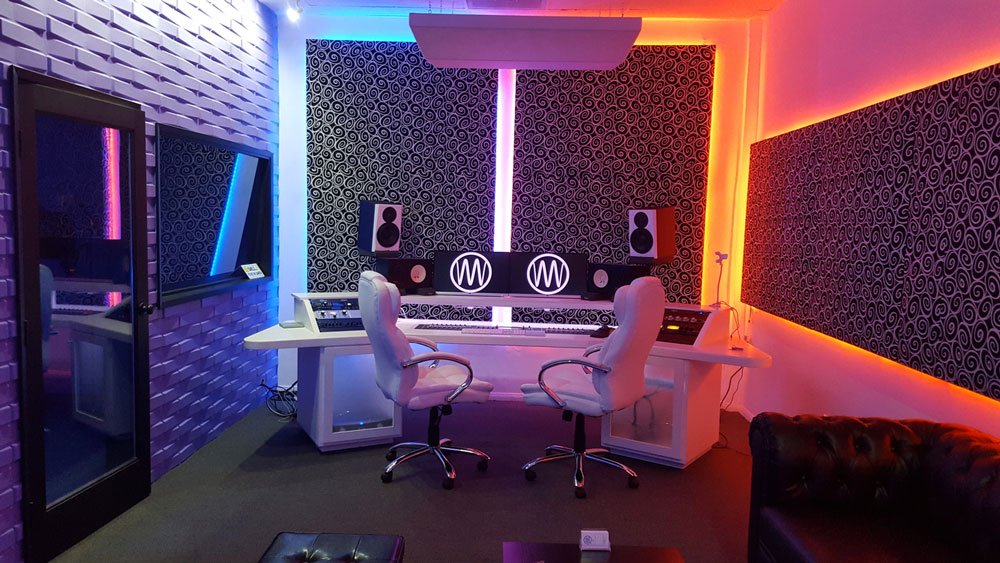
Ready to run the chain on your session? Daytime studio time starts at $55/hr.
Book at mixrecordingstudio.com/booking or call +13232187475. Open 24/7.
Questions Artists Ask
What is mixing in music?
Mixing in music is the process of taking all individually recorded tracks in a session and blending them into a single, cohesive stereo (or spatial) output. The engineer adjusts volume levels, applies EQ to separate frequency content, uses compression to control dynamics, and adds spatial effects like reverb and delay. The goal is a finished file where every element is audible, intentional, and translates across playback systems.
What genre is hardest to mix?
Most engineers cite orchestral and live jazz as the most technically demanding genres to mix, because they require preserving wide dynamic range while maintaining natural room acoustics across dozens of acoustic instruments. Metal is often cited as the hardest genre for balance and clarity, given the density of distorted guitars, fast drumming, and aggressive low-end. Hip-hop presents its own complexity around sub-bass management, where 808s must translate on both consumer earbuds and nightclub sound systems simultaneously.
What is the difference between mixing and mastering?
Mixing works inside the multitrack session, processing individual tracks before printing a stereo file. Mastering works on that finished stereo file, applying broad tonal correction, loudness optimization, and format preparation for streaming, vinyl, or broadcast. Mixing and mastering require different monitoring setups, different processing chains, and are typically handled in separate sessions. MIX Recording Studio handles both services in Los Angeles.
How much does mixing and mastering cost in Los Angeles?
At MIX Recording Studio in Los Angeles, daytime studio sessions start at $55/hr. Dolby Atmos mixing and mastering is available as a per-song package: $399 per song for already-mixed stereo tracks, or $599 per song when stereo mixing and Atmos are combined. Prepaid time packages are available, including a 30-hour block at $1,235 total (displayed as $41/hr) and a 50-hour block at $1,925 total (displayed as $39/hr). Call (323) 218-7475 to confirm current availability.
Where can I get professional mixing and mastering in Los Angeles?
MIX Recording Studio at 539 S Rampart Blvd, Los Angeles, CA 90057, offers professional mixing, mastering, and Dolby Atmos services. The studio is open 24/7, holds a 4.9-star rating from 388 Google reviews, and is located minutes from downtown LA near the 110 freeway. Booking is available online at mixrecordingstudio.com/booking or by phone at (323) 218-7475.
Mixing is where a session becomes a song. The signal chain is not a mystery once you understand what each stage is actually fixing. Book a session at MIX Recording Studio and work through the chain with engineers who have run it on projects that reach millions of listeners. Visit mixrecordingstudio.com or call (323) 218-7475.